
Vemo V30-72-0145
Vemo V30-72-0145 Wheel Speed Sensor User Manual
Model: V30-72-0145 | Brand: Vemo
1. தயாரிப்பு முடிந்துவிட்டதுview
The Vemo V30-72-0145 is a high-quality wheel speed sensor designed for automotive applications. This sensor plays a critical role in vehicle safety systems, including the Anti-lock Braking System (ABS), Traction Control System (TCS), and Electronic Stability Program (ESP). It accurately measures the rotational speed of the wheel and transmits this data to the vehicle's Electronic Control Unit (ECU), enabling precise control over braking and stability functions.
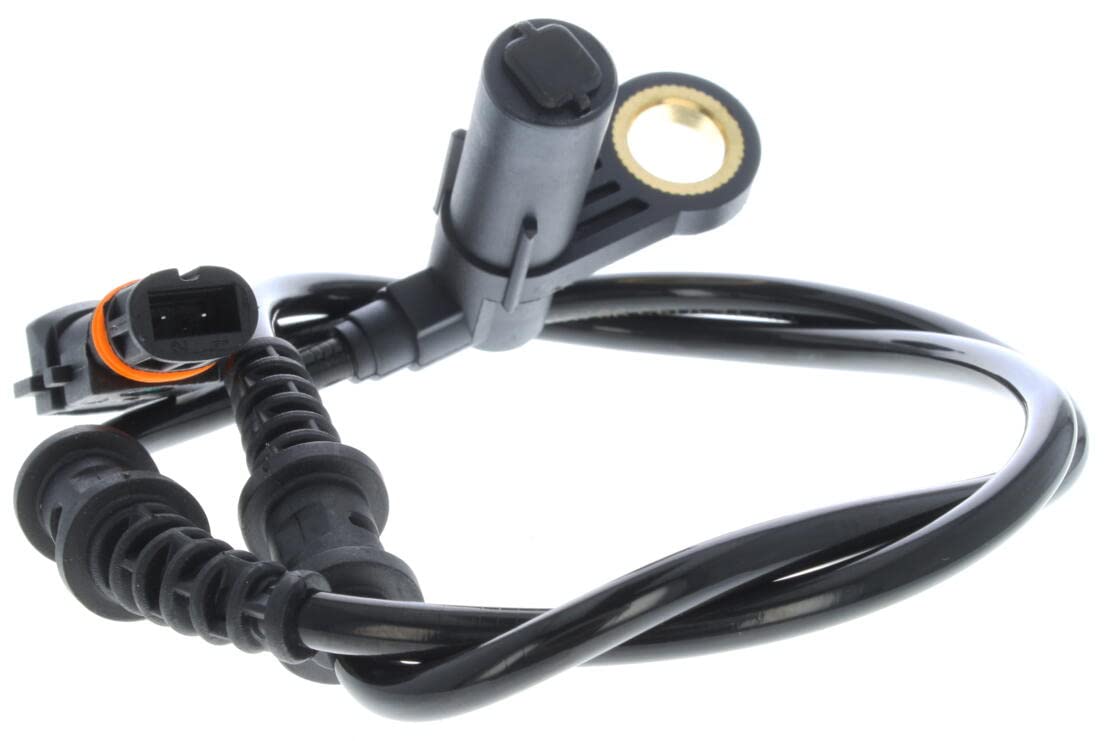
Figure 1: The Vemo V30-72-0145 wheel speed sensor, showing its main body, cable, and connector. The sensor features a flange mount design and is constructed from durable Acrylonitrile Butadiene Styrene.
2. விவரக்குறிப்புகள்
| பண்பு | விவரம் |
|---|---|
| பிராண்ட் | வேமோ |
| மாதிரி எண் | V30-72-0145 |
| பொருள் | அக்ரிலோனிட்ரைல் புடாடியீன் ஸ்டைரீன் |
| பொருளின் எடை | 1.6 அவுன்ஸ் |
| பரிமாணங்கள் (L x W x H) | 4.9 x 1 x 9 அங்குலம் |
| மவுண்டிங் வகை | ஃபிளேன்ஜ் மவுண்ட் |
| பதவி | முன் |
| OEM பகுதி எண்கள் | MERCEDES-BENZ: 220 540 01 17, 220 540 02 17 |
3. அமைவு மற்றும் நிறுவல்
Installation of the Vemo V30-72-0145 wheel speed sensor should be performed by a qualified technician or an individual with experience in automotive repair. Incorrect installation can lead to system malfunctions and compromise vehicle safety.
3.1. முன் நிறுவல் சோதனைகள்
- மின்சார ஆபத்துகளைத் தடுக்க வாகனத்தின் பற்றவைப்பு அணைக்கப்பட்டுள்ளதா என்பதையும், பேட்டரி துண்டிக்கப்பட்டுள்ளதா என்பதையும் உறுதிப்படுத்திக் கொள்ளுங்கள்.
- Identify the correct wheel location for sensor replacement (e.g., front left, front right).
- Inspect the new sensor for any visible damage or defects.
- Gather necessary tools, which typically include wrenches, sockets, a flathead screwdriver, and potentially a diagnostic scanner.
3.2. பழைய சென்சார் அகற்றுதல்
- Safely lift the vehicle and secure it with jack stands. Remove the wheel.
- Locate the existing wheel speed sensor. It is usually mounted near the wheel hub or steering knuckle.
- Disconnect the electrical connector by carefully pressing the release tab and pulling it apart. Avoid pulling on the wires.
- Unbolt the sensor from its mounting point. Some sensors may be held by a single bolt, while others might be pressed into a bore.
- Carefully remove the old sensor. If it is seized, use penetrating oil and gentle persuasion. Avoid damaging the sensor ring or tone wheel.
3.3. புதிய சென்சார் நிறுவல்
- Clean the mounting surface and bore thoroughly to ensure proper seating of the new sensor. Remove any rust or debris.
- Insert the new Vemo V30-72-0145 sensor into its mounting location. Ensure it is fully seated and aligned correctly.
- Secure the sensor with the mounting bolt(s). Tighten to the manufacturer's specified torque, if available. Do not overtighten.
- Connect the electrical connector firmly until it clicks into place. Ensure a secure connection.
- Route the sensor cable along the original path, securing it with any clips or ties to prevent chafing or interference with moving parts.
- சக்கரத்தை மீண்டும் நிறுவி வாகனத்தை கீழே இறக்கவும்.
- பேட்டரியை மீண்டும் இணைக்கவும்.
3.4. Post-Installation Verification
- Start the vehicle and check for any ABS, TCS, or ESP warning lights on the dashboard.
- If a diagnostic scanner is available, clear any stored fault codes related to the wheel speed sensor.
- Perform a short test drive to confirm proper operation of the ABS and other related systems. The warning lights should extinguish if the sensor is functioning correctly.
4. இயக்கக் கோட்பாடுகள்
The Vemo V30-72-0145 wheel speed sensor operates on the principle of electromagnetic induction or the Hall effect, depending on its specific design. Most modern wheel speed sensors are active sensors, meaning they require a power supply and generate a digital signal.
- Sensor Ring/Tone Wheel: The sensor works in conjunction with a toothed wheel (tone wheel) or a magnetic encoder ring, typically located on the wheel hub or axle shaft.
- சிக்னல் உருவாக்கம்: As the wheel rotates, the teeth of the tone wheel or the magnetic poles of the encoder ring pass by the sensor. This movement induces a voltage pulse (in passive sensors) or causes a change in the magnetic field detected by the Hall effect element (in active sensors).
- சமிக்ஞை பரிமாற்றம்: These pulses or changes are converted into an electrical signal, which is then sent to the vehicle's ECU. The frequency of these pulses is directly proportional to the wheel's rotational speed.
- ECU Interpretation: The ECU uses this speed data from all wheels to determine if a wheel is locking up during braking (ABS), slipping during acceleration (TCS), or if the vehicle is losing directional stability (ESP). Based on this information, the ECU can modulate brake pressure or engine power to maintain control.
5. பராமரிப்பு
Wheel speed sensors are generally low-maintenance components. However, periodic inspection can help ensure their longevity and proper function.
- காட்சி ஆய்வு: During routine vehicle maintenance (e.g., tire rotations, brake inspections), visually inspect the sensor and its wiring for any signs of physical damage, corrosion, or fraying.
- தூய்மை: Ensure the sensor head and the tone wheel/encoder ring are free from excessive dirt, rust, or debris, which can interfere with accurate readings. Use a soft brush or compressed air for cleaning if necessary.
- பாதுகாப்பான மவுண்டிங்: Verify that the sensor is securely mounted and not loose.
- வயரிங் ஒருமைப்பாடு: Check that the wiring harness is properly routed and secured, preventing it from rubbing against moving parts or hot surfaces.
Do not attempt to disassemble the sensor, as it is a sealed unit and not user-serviceable.
6. சரிசெய்தல்
If you experience issues with your vehicle's ABS, TCS, or ESP systems, or if a warning light illuminates, the wheel speed sensor may be a contributing factor. Here are common troubleshooting steps:
| அறிகுறி | சாத்தியமான காரணம் | தீர்வு |
|---|---|---|
| ABS/TCS/ESP warning light illuminated | Faulty sensor, damaged wiring, dirty tone wheel, or ECU issue. |
|
| Erratic speedometer readings | Incorrect signal from a wheel speed sensor (less common for this specific sensor, but possible if used for speedometer input). |
|
| ABS activates at low speeds or when stopping | Sensor signal discrepancy, often due to a dirty or damaged tone wheel, or a faulty sensor. |
|
குறிப்பு: Many issues related to wheel speed sensors require specialized diagnostic tools and automotive knowledge. If you are unsure about any step, it is highly recommended to seek assistance from a certified automotive technician.
7. உத்தரவாதம் மற்றும் ஆதரவு
Vemo products are manufactured to high standards. For specific warranty information regarding the Vemo V30-72-0145 wheel speed sensor, please refer to the warranty documentation provided with your purchase or visit the official Vemo webஉத்தரவாத விதிமுறைகள் பொதுவாக வாங்கிய தேதியிலிருந்து ஒரு குறிப்பிட்ட காலத்திற்கு உற்பத்தி குறைபாடுகளை உள்ளடக்கும்.
For technical support, installation queries, or warranty claims, please contact your authorized Vemo distributor or the Vemo customer service department. Ensure you have your product model number (V30-72-0145) and proof of purchase available when contacting support.
Vemo Official Webதளம்: www.vemo.com (இது ஒரு ஒதுக்கிடம் URL, please verify the actual Vemo web(ஆதரவுக்கான தளம்.)
Ask a question about this manual
Ask about setup, troubleshooting, compatibility, parts, safety, or missing instructions. Manuals+ will review the question and use this page’s manual context to help answer it.