
1. அறிமுகம் மற்றும் முடிந்துவிட்டதுview
The URayCoder HEVC H.265 H.264 SD HD 3G SDI to IP Encoder is a professional-grade device designed for high-quality video and audio live streaming and transmission over IP networks. This encoder converts SDI signals into various IP streaming formats, making it suitable for broadcasting, remote monitoring, and other professional video applications. It supports a wide array of streaming protocols and offers extensive customization options for video and audio output.
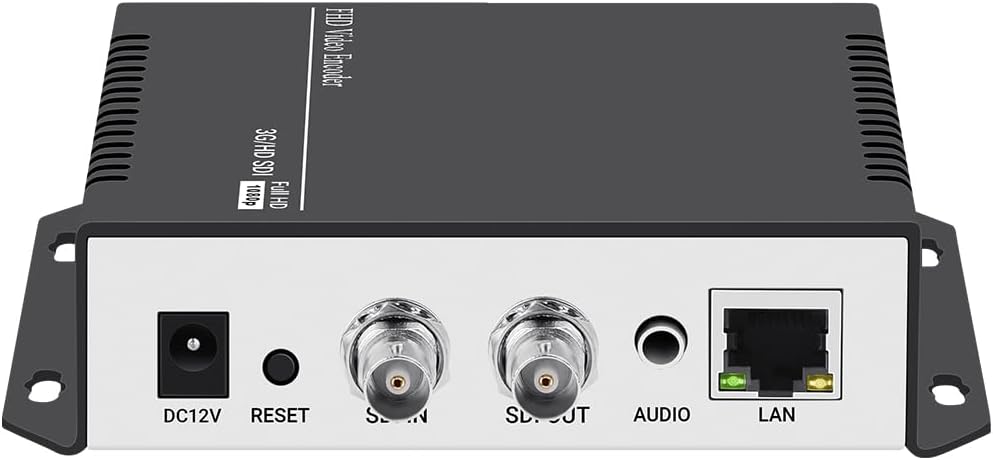
படம் 1.1: முன் மற்றும் பின்புறம் View of the URayCoder SDI to IP Encoder, showing DC12V power input, Reset button, SDI IN, SDI OUT, Audio input, and LAN port.
2. தயாரிப்பு அம்சங்கள்
This encoder is equipped with advanced features to ensure reliable and versatile video streaming:
- புதுமையான தொழில்நுட்பம்: Ideal for broadcast video and audio, supporting live streaming to major platforms like YouTube, Facebook, Ustream, Livestream, Twitch, Vimeo, Streamspot, Dacast, and Tikilive.
- Multiple Video Stream Output: Capable of outputting up to 4 video streams simultaneously, each configurable with different streaming protocols.
- Extensive Streaming Protocols: Supports HTTP, RTSP, RTMP(S), SRT, HLS(M3U8), UDP, RTP, MP4, Multicast, Unitcast, FLV, and ONVIF.
- Flexible Video Stream Settings: Customize output video streams by adding static text, scrolling text, logos, or time. Adjust parameters such as resolution, frame rate, bitrate, and apply cropping, rotation, flipping, or mirroring. Audio output is also adjustable.
- High-Quality Chip: Utilizes an upgraded high-end chip (e.g., Ambarella S6L55M) for more powerful and stable performance.
- 24/7 செயல்பாடு: Designed for stable and effective continuous operation.

Figure 2.1: Supported Streaming Protocols including MP4, RTSP, HTTP, RTMP(S), HLS, SRT, Onvif, and UDP.

Figure 2.2: Key Features of the URayCoder Encoder.
3. அமைவு வழிகாட்டி
Follow these steps to set up your URayCoder SDI to IP Encoder:
- மின் இணைப்பு: Connect the provided DC12V power adapter to the encoder's DC12V input port.
- SDI உள்ளீடு: Connect your SDI video source (e.g., broadcast camera, CCTV camera, other SDI source) to the 'SDI IN' port on the encoder.
- SDI Loop Out (Optional): If you need to monitor the SDI input locally, connect a display monitor to the 'SDI OUT' port. This provides a direct passthrough of the SDI signal.
- ஆடியோ உள்ளீடு (விரும்பினால்): If using external audio, connect your audio source to the 'AUDIO' 3.5mm jack. The encoder also supports embedded SDI audio.
- பிணைய இணைப்பு: Connect an Ethernet cable from the encoder's 'LAN' port to your router, switch, or network hub. Ensure your network provides DHCP or configure a static IP address as needed.
- ஆரம்ப அணுகல்: Once powered on and connected to the network, the encoder will obtain an IP address (if DHCP is enabled). You can typically find the device's IP address using a network scanner tool or by checking your router's connected devices list. Access the encoder's web-based configuration interface by entering its IP address into a web உலாவி.

Figure 3.1: Typical Setup for Online Live Broadcast.

Figure 3.2: Typical Setup for Remote Video Transmission.

Figure 3.3: Comprehensive Connection Diagram.
4. இயக்க வழிமுறைகள்
The URayCoder encoder is primarily configured and operated via its web-based graphical user interface (GUI).
4.1 Web இடைமுக வழிசெலுத்தல்
After accessing the encoder's IP address in your web browser, you will be presented with the main dashboard. The left-hand navigation pane allows you to access different settings categories:
- நிலை: View real-time operational data, including running time, device time, CPU usage, temperature, network status, input resolution, and collected video/audio frames.
- குறியாக்கி: Configure video and audio encoding parameters for main and substreams.
- OSD (திரை காட்சியில்): Manage text, logo, and time overlays on the output video.
- அமைப்பு: Access network settings, password management, firmware upgrade, reboot, schedule reboot, and factory reset options.

படம் 4.1: Web GUI - Status Display.
4.2. வீடியோ மற்றும் ஆடியோ அமைப்புகள்
Navigate to the 'Encoder' section to configure your streaming outputs:
- குறியீட்டு வகை: Select H.265 or H.264.
- Resolution & Frame Rate: Adjust encoded video resolution (e.g., 1920x1080, 1280x720) and frame rate (FPS).
- பிட்ரேட்: Set the target bitrate for your video streams.
- Streaming Protocols: Enable and configure URLs for various protocols such as TS, HLS, FLV, RTSP, RTMP(S), SRT, UDP, and Multicast.
- ஆடியோ அமைப்புகள்: Select audio input (SDI Audio or Line-in Audio), sampling rate, encoder type (AAC, MP3, etc.), bitrate, and digital volume gain.

படம் 4.2: Web GUI - Output Video and Audio Settings.
4.3. On Screen Display (OSD)
The OSD feature allows you to overlay custom elements onto your video stream. Go to the 'OSD' section to configure up to four zones:
- Enable/Disable Zone: Activate or deactivate each OSD zone.
- வகை: Choose between text, scrolling text, or time.
- பதவி: Set X and Y coordinates for the overlay.
- Text/Logo: Enter custom text or upload a logo (BMP/PNG format, max 500KB).
- Font Size & Color: Adjust font size and color for text overlays.
- பின்னணி நிறம்: Set background color for text, including transparent option.
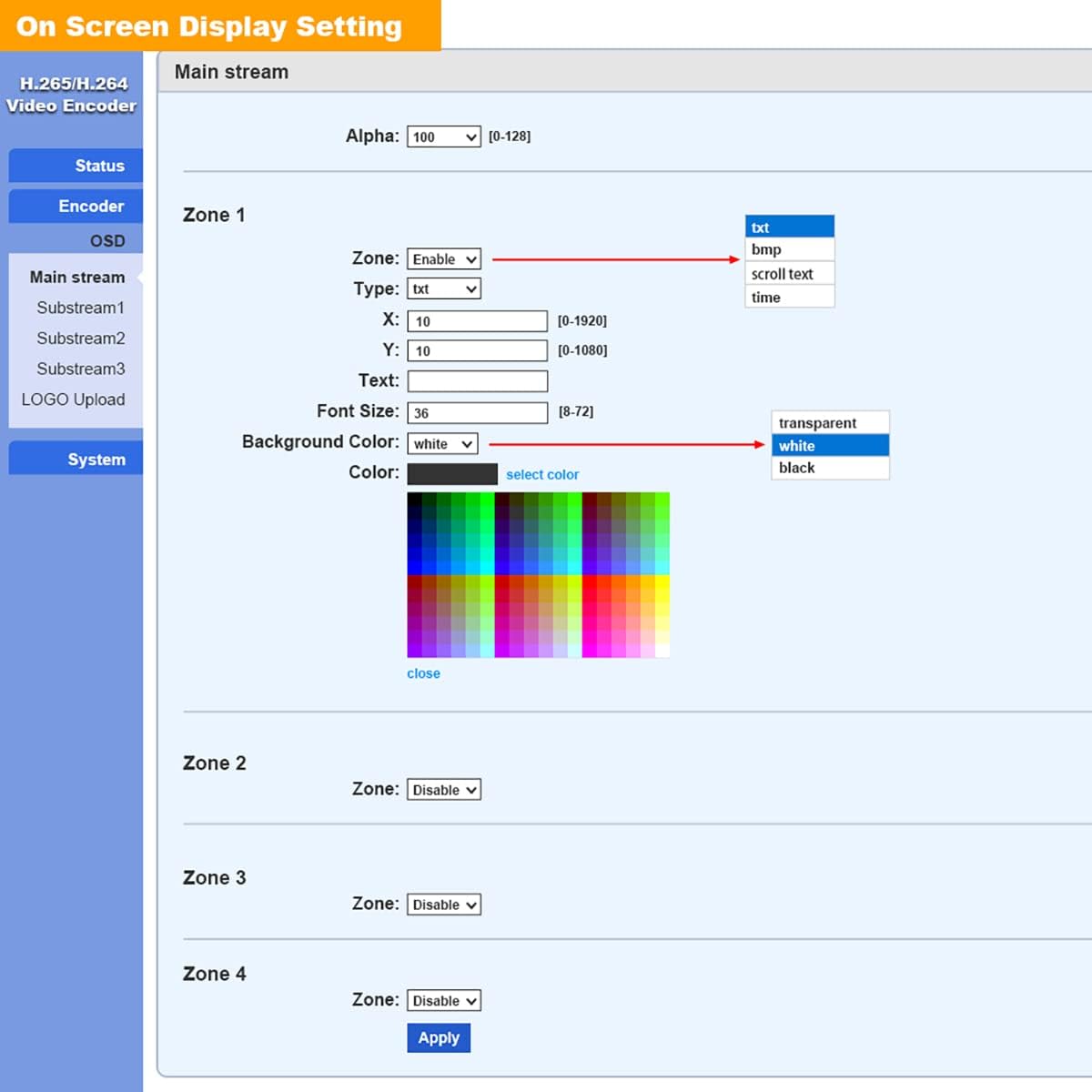
படம் 4.3: Web GUI - On Screen Display Setting.
4.4. மேம்பட்ட அமைப்புகள்
The 'Advanced' section under 'Encoder' provides granular control over various video processing and network parameters, including EDID settings, deinterlacing, HLS parameters, SRT latency, TS Muxer compatibility, and UDP/RTP settings. Adjust these settings only if you have a clear understanding of their impact on streaming performance.

படம் 4.4: Web GUI - Advanced Settings.
5. பராமரிப்பு
To ensure the longevity and optimal performance of your URayCoder encoder, consider the following maintenance practices:
- உடல் சூழல்: Place the encoder in a well-ventilated area to prevent overheating. Avoid exposing it to extreme temperatures, humidity, or direct sunlight.
- சுத்தம்: Regularly clean the exterior of the device with a soft, dry cloth. Do not use liquid cleaners or aerosols.
- நிலைபொருள் புதுப்பிப்புகள்: உற்பத்தியாளரின் website for firmware updates. Firmware updates can improve performance, add new features, and resolve potential issues. You can upload new firmware via the 'System Upgrade' section in the web இடைமுகம்.
- பாதுகாப்பான கட்டமைப்பு: வழக்கமாக மறுview and update your device's password to prevent unauthorized access.

படம் 5.1: Web GUI - System Upgrade and Logo Upload.
6. சரிசெய்தல்
If you encounter issues with your URayCoder encoder, refer to the following common troubleshooting steps:
- சக்தி இல்லை: Ensure the DC12V power adapter is securely connected to both the encoder and a working power outlet. Check the power indicator light on the device.
- No Video Output/Input: Verify that the SDI input source is active and properly connected to the 'SDI IN' port. Check the input resolution and format compatibility in the 'Status' section of the web GUI. Ensure the output streaming URLs are correctly configured and accessible.
- ஆடியோ இல்லை: Confirm that the audio source is active and connected correctly (either embedded in SDI or via the 3.5mm audio jack). Check audio settings in the web GUI, including input selection and encoding parameters.
- நெட்வொர்க் இணைப்பு சிக்கல்கள்: Ensure the Ethernet cable is securely connected to the 'LAN' port and your network. Verify the encoder's IP address and network settings (subnet mask, gateway) in the 'System' section. Try rebooting the encoder and your network router.
- Audio/Video Sync Issues: This can sometimes occur due to network latency or incorrect encoding settings. Review the 'Advanced' settings for potential adjustments related to synchronization or buffering.
- Web Interface Unresponsive: உங்கள் உலாவியின் தற்காலிக சேமிப்பை அழிக்க முயற்சிக்கவும் அல்லது வேறு ஒன்றைப் பயன்படுத்தவும் web browser. If the issue persists, power cycle the encoder.
- தொழிற்சாலை மீட்டமைப்பு: As a last resort for persistent issues, you can perform a factory reset via the 'System' section in the web GUI. This will revert all settings to their default values.
7. விவரக்குறிப்புகள்
| பண்பு | மதிப்பு |
|---|---|
| தயாரிப்பு பரிமாணங்கள் | 6.69 x 5.12 x 1.18 அங்குலம் |
| பொருளின் எடை | 1.1 பவுண்டுகள் |
| மாதிரி எண் | USE265-1L |
| இணக்கமான சாதனங்கள் | Devices with SDI Output |
| இணைப்பான் வகை | SDI |
| நிறம் | Black on top, silver on bottom |
| உற்பத்தியாளர் | URay |
| முதல் தேதி கிடைக்கும் | ஏப்ரல் 26, 2018 |
8. உத்தரவாதம் மற்றும் ஆதரவு
All URayCoder video encoders and video decoders include free lifetime technical support and warranty. For assistance, please contact URayCoder customer support through their official channels. Additionally, SDK and API as well as CGI control protocol documents are available for secondary development, enabling advanced integration and customization.
For the most up-to-date support information and resources, please visit the official URayCoder webதளத்தில் அல்லது உங்கள் தயாரிப்பு பேக்கேஜிங்குடன் வழங்கப்பட்ட தொடர்பு விவரங்களைப் பார்க்கவும்.