
125 125q4csagk5u21502
SF P101N CD Player Completer Mechanism User Manual
Model: 125q4csagk5u21502 | Brand: 125
அறிமுகம்
This manual provides essential information for the SF P101N CD Player Completer Mechanism. This component is designed as a replacement part for various CD players and HiFi systems that utilize the SF-P101N laser unit. It is crucial to verify compatibility, particularly regarding the ribbon connector pin count, before installation.
தயாரிப்பு விவரக்குறிப்புகள்
| வகை | தலை |
| இசைக்குழு வரம்பு | காணக்கூடிய ஒளி |
| செயல்பாட்டு முறை | தொடர்ச்சியான |
| Incentive Method | Optical Pump |
| Working Substance | குறைக்கடத்தி |
| Light Way | Inner Light Way |
| வெளியீட்டு படிவம் | NPN Triode Type |
| வாயில் வகை | Three-State Gate Type |
| வேகம் | குறைந்த வேகம் |
| சேனல் | ஒற்றை சேனல் |
| தயாரிப்பு பரிமாணங்கள் | 0.39 x 0.39 x 0.39 அங்குலம் |
| பொருளின் எடை | 4.9 அவுன்ஸ் |
| ஆதரிக்கப்படும் ஆடியோ வடிவம் | MP3 |
முக்கிய அம்சங்கள்
- பரந்த இணக்கத்தன்மை: This mechanism is applicable to many brands of CD players and HiFi systems that utilize SF-P101N lasers.
- பின் கட்டமைப்பு: The provided version is the 16-pin type, which is the most common. It is essential to verify your existing unit's pin count as 6-pin and 15-pin versions are not interchangeable.
- Effective Repair Solution: Replacing the entire mechanism, including the SF-P101N laser, offers a comprehensive repair by replacing all moving parts involved in CD reading.
- அடையாளம்: The model number (SF-P101N) is typically printed on the housing of the laser unit. Confirm this marking and the 16-pin connector count for proper identification.
தொகுப்பு உள்ளடக்கங்கள்
- 1 x SF P101N CD Player Completer Mechanism
நிறுவல் வழிகாட்டி
முக்கியமானது: Installation of this component requires technical proficiency and familiarity with electronics, including soldering and desoldering. If you are not comfortable with these procedures, it is recommended to seek professional assistance.
- தயாரிப்பு:
- Ensure the CD player or HiFi system is completely powered off and unplugged from the mains.
- Gather necessary tools: screwdrivers, desoldering iron, soldering iron, solder, anti-static wrist strap.
- சுத்தமான, நல்ல வெளிச்சம் உள்ள மற்றும் நிலையான-இல்லாத சூழலில் வேலை செய்யுங்கள்.
- Accessing the Mechanism:
- c-ஐ கவனமாகத் திறக்கவும்.asing of your CD player/HiFi system according to its service manual or common disassembly procedures.
- Locate the existing CD player mechanism.
- Disconnecting the Old Mechanism:
- Gently disconnect the ribbon cable from the old mechanism. Note the orientation.
- முக்கியமான படி: The SF-P101N laser unit typically has a solder blob (anti-static point) that needs to be desoldered before installation. This blob protects the laser diode from static discharge during transport. Failure to desolder this point will prevent the unit from functioning. Locate this small solder bridge, usually on the flexible PCB near the connector, and carefully remove it using a desoldering iron.
- Unscrew and remove the old mechanism from its mounting points.
- Installing the New Mechanism:
- Carefully place the new SF P101N mechanism into position.
- பொருத்தமான திருகுகள் மூலம் அதைப் பாதுகாக்கவும்.
- Connect the ribbon cable, ensuring correct orientation and a secure fit. Double-check that it is the 16-pin version if your original was 16-pin.
- சோதனை மற்றும் மறுசீரமைப்பு:
- Before fully reassembling the device, perform a preliminary test. Power on the unit and attempt to load and play a CD.
- If the CD reads correctly, proceed to carefully reassemble the casing of your CD player/HiFi system.
- சிக்கல்கள் தொடர்ந்தால், சரிசெய்தல் பகுதியைப் பார்க்கவும்.

படம் 1: மேல் view of the mechanism, highlighting the main gears and laser assembly.
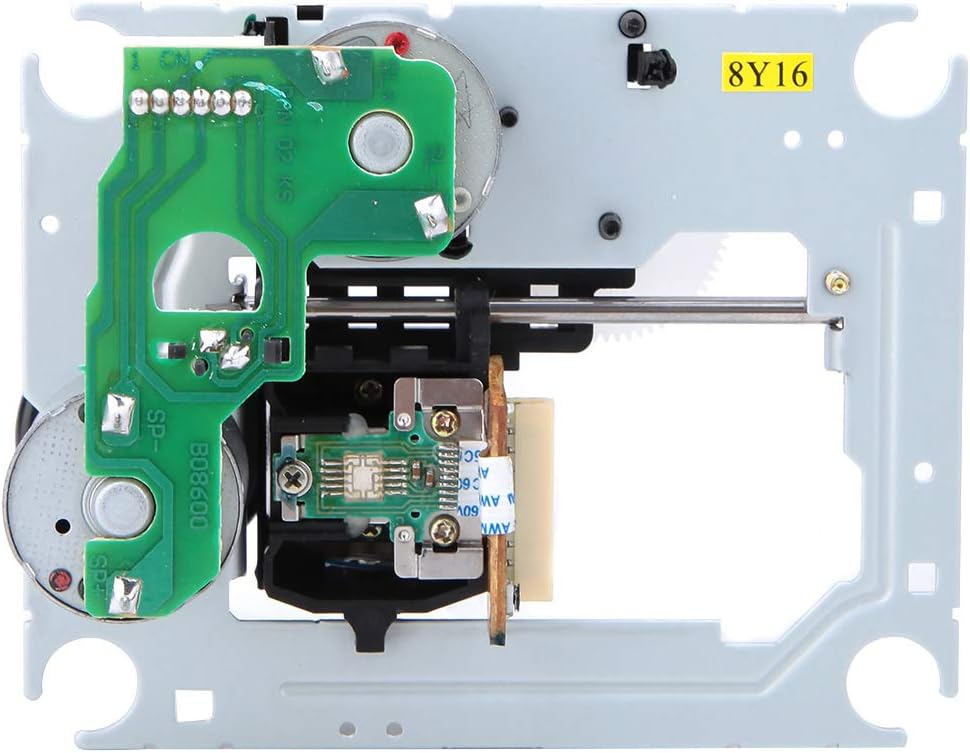
படம் 2: கீழே view, illustrating the circuit board and the 16-pin ribbon cable connector. The anti-static solder blob is typically located near this connector.

படம் 3: கோணல் view, demonstrating the compact design suitable for various CD player and HiFi applications.
இயக்கக் கோட்பாடுகள்
The SF P101N mechanism functions as the core optical reading unit within a CD player. Once installed, it works in conjunction with the player's control circuitry to:
- Disc Loading: Facilitate the proper positioning of the CD for reading.
- Laser Emission: Emit a low-power laser beam (visible light spectrum) onto the CD's surface.
- சிக்னல் கண்டறிதல்: Detect the reflected laser light, which carries the digital audio information encoded on the disc.
- Tracking and Focusing: Continuously adjust the laser's focus and tracking to accurately read data as the disc spins.
- தரவு மாற்றம்: Convert the optical signals into electrical signals for further processing by the CD player's digital-to-analog converter (DAC).
The mechanism operates in a continuous mode, ensuring stable and uninterrupted data retrieval from the compact disc.
பராமரிப்பு
As an internal component, the SF P101N mechanism generally requires minimal user maintenance. However, proper care of the overall CD player can extend its lifespan:
- தூசி இல்லாமல் வைத்திருங்கள்: Ensure the CD player's environment is as dust-free as possible. Dust can accumulate on the laser lens, affecting reading performance.
- வட்டுகளை கவனமாகக் கையாளவும்: Always handle CDs by their edges to avoid fingerprints and scratches on the playing surface, which can cause reading errors.
- Avoid Physical Shocks: Protect the CD player from sudden impacts or vibrations, as these can misalign internal components.
- Professional Cleaning (If Necessary): If persistent reading issues occur after installation, and you suspect a dirty laser lens, consider professional cleaning. Avoid attempting to clean the laser lens yourself unless you have specialized tools and knowledge, as improper cleaning can cause damage.
சரிசெய்தல்
If you encounter issues after installing the SF P101N mechanism, consider the following:
| பிரச்சனை | சாத்தியமான காரணம் | தீர்வு |
|---|---|---|
| CD player does not read discs or shows "No Disc" error. |
|
|
| Disc spins but no audio or skipping. |
|
|
| Mechanism makes unusual noises. |
|
|
உத்தரவாதம் மற்றும் ஆதரவு
இந்த தயாரிப்பு பொருட்கள் மற்றும் வேலைப்பாடுகளில் உள்ள குறைபாடுகளுக்கு எதிராக உற்பத்தியாளரின் நிலையான உத்தரவாதத்தால் மூடப்பட்டுள்ளது. உத்தரவாதக் கோரிக்கைகளுக்கு உங்கள் வாங்கியதற்கான ஆதாரத்தை வைத்திருங்கள்.
For technical support or warranty inquiries, please contact the retailer or manufacturer directly. Provide your product model number (125q4csagk5u21502) and a detailed description of the issue.
Ask a question about this manual
Ask about setup, troubleshooting, compatibility, parts, safety, or missing instructions. Manuals+ will review the question and use this page’s manual context to help answer it.