
1. தயாரிப்பு முடிந்துவிட்டதுview
This manual provides essential information for the installation, operation, and maintenance of the Cloudray EZCAD3 Fiber Marking Controller, model JCZ DLC2-M4-2D. This advanced control board is designed for fiber laser marking machines, offering robust performance and support for complex marking tasks, including 2.5D deep marking.
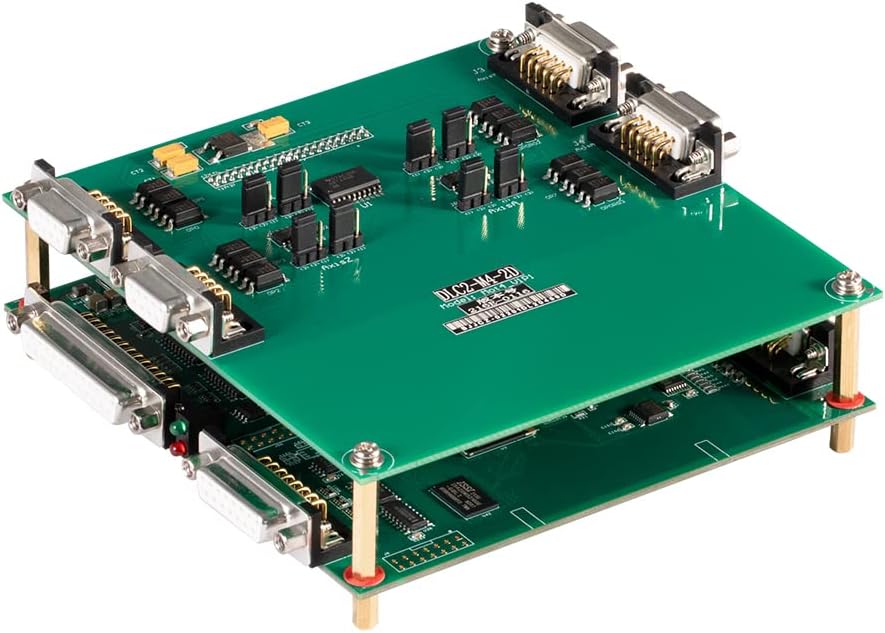
படம் 1: மேலிருந்து கீழ் view of the Cloudray EZCAD3 Fiber Marking Controller JCZ DLC2-M4-2D, showcasing its dual-layer PCB design with various electronic components and connectors.
2 முக்கிய அம்சங்கள்
- Advanced Software Kernel: Utilizes a 64-bit EZCAD3 software kernel for faster processing of large files, capable of handling gigabyte-level data.
- Diverse Marking Methods: Offers 8 types of marking filling methods in EZCAD3 and 5 types in EZCAD2 for versatile application.
- 2.5D Deep Marking Support: Supports 2.5D deep marking and relief marking functions, requiring a motorized Z-axis lifting column for optimal performance.
- ஆஃப்லைன் செயல்பாடு: குறியிடுதல் files can be saved directly onto the control board, enabling offline marking initiation via the I/O interface.
- 3D Galvanometer Compatibility: Achieves 3D curved surface or large-format marking when paired with a 3D galvanometer.
- நிகழ் நேர கண்காணிப்பு: Allows real-time monitoring of the processing area through a webcam integrated into the software interface (webcam software license sold separately).
- நெட்வொர்க் கட்டுப்பாடு: Supports TCP/IP command control via a server on the same local network for remote operation.
- Parameter Optimization: EZCAD3 includes a parameter assistant to quickly generate arrays of processing parameters, aiding in finding the best settings for marking results.

படம் 2: கோணல் view of the Cloudray EZCAD3 Fiber Marking Controller, highlighting the various input/output ports and connectors for integration into a fiber marking system.
3. அமைவு வழிமுறைகள்
3.1 பேக்கிங் மற்றும் ஆய்வு
Carefully unpack the control board and inspect it for any visible damage. Ensure all components are present according to the packing list. If any damage or missing parts are found, contact your supplier immediately.
3.2 வன்பொருள் இணைப்புகள்
- மின்சாரம்: Connect a stable +12V DC / 3A power supply to the designated power input port on the control board. Ensure correct polarity.
- Galvanometer Connection: Connect the galvanometer scanner to the appropriate ports on the control board. Refer to the wiring diagram provided with your galvanometer for specific pin assignments.
- Laser Source Connection: Connect the fiber laser source control signals (e.g., Q-switch, enable, power modulation) to the corresponding output ports on the control board.
- கணினி இணைப்பு: Connect the control board to your computer via a USB cable. Ensure the USB connection is secure.
- I/O இணைப்புகள்: If using external devices or sensors, connect them to the available input and output signal ports as required for your application.
- Z-Axis (Optional): For 2.5D deep marking, connect a motorized Z-axis lifting column to the designated control ports.

Image 3: Dimensional drawing illustrating the layout and measurements of the 1st Layer (DLC2 Control Board) and 2nd Layer (M4 Motion Control Board) of the Cloudray controller, including mounting hole positions.
3.3 மென்பொருள் நிறுவல்
Install the EZCAD3 software on your computer. Follow the instructions provided with the software package. Ensure that the correct drivers for the control board are installed during this process.
4. இயக்க வழிமுறைகள்
4.1 மென்பொருளைத் தொடங்குதல்
Launch the EZCAD3 software. The software should automatically detect the connected control board. If not, check your USB connection and driver installation.
4.2 Loading and Creating Designs
You can import existing design files (e.g., DXF, AI, PLT) or create new designs directly within the EZCAD3 software. Utilize the various drawing and editing tools available.
4.3 Setting Marking Parameters
Configure the laser marking parameters according to your material and desired marking effect. This includes:
- லேசர் சக்தி
- குறிக்கும் வேகம்
- அதிர்வெண்
- Fill type and density
- பாஸ்களின் எண்ணிக்கை
- Z-axis height (for 2.5D marking)
Use the parameter assistant feature to help optimize these settings.
4.4 முன்view and Positioning
மென்பொருளின் முன்-நிரல்களைப் பயன்படுத்தவும்view function to visualize the marking path. Adjust the position of your workpiece and the marking area as needed. For systems with a webcam, use the real-time monitoring feature for precise alignment.
4.5 Initiating Marking
Once all parameters are set and the design is positioned, click the 'Mark' button in the software to begin the laser marking process. Ensure all safety precautions are observed before starting.
5. பராமரிப்பு
To ensure the longevity and optimal performance of your Cloudray EZCAD3 Fiber Marking Controller, follow these maintenance guidelines:
- சுத்தமாக வைத்துகொள்: Regularly clean the control board and its connectors to prevent dust accumulation, which can lead to overheating or short circuits. Use a soft, dry brush or compressed air.
- சுற்றுச்சூழல்: Operate the board in a clean, dry, and temperature-controlled environment. Avoid exposure to excessive humidity, extreme temperatures, or corrosive substances.
- நிலையான வெளியேற்றம்: Always handle the board with anti-static precautions to prevent damage from electrostatic discharge (ESD).
- இணைப்பு சோதனைகள்: அனைத்து கேபிள் இணைப்புகளும் பாதுகாப்பாகவும் சேதமடையாமலும் இருப்பதை உறுதிசெய்ய அவ்வப்போது அவற்றைச் சரிபார்க்கவும்.
6. சரிசெய்தல்
If you encounter issues with your Cloudray EZCAD3 Fiber Marking Controller, refer to the following common troubleshooting steps:
- சக்தி இல்லை: Verify that the +12V DC power supply is correctly connected and functioning. Check the power indicator light on the board.
- Software Not Detecting Board: Ensure the USB cable is securely connected to both the computer and the control board. Reinstall the EZCAD3 software and drivers if necessary. Try a different USB port or cable.
- லேசர் சுடவில்லை: Check connections to the laser source. Verify laser parameters in EZCAD3. Ensure the laser source is enabled and ready.
- Galvanometer Not Moving: Check galvanometer connections. Ensure the galvanometer is powered and calibrated correctly within the software.
- Marking Quality Issues: Review and adjust laser parameters (power, speed, frequency, fill settings). Ensure the focal distance is correct. Check for any mechanical issues with the laser system.
- மென்பொருள் பிழைகள்: Consult the EZCAD3 software manual for specific error codes. Ensure your software version is up to date.
If the problem persists after attempting these steps, contact Cloudray technical support or your local distributor for further assistance.
7. விவரக்குறிப்புகள்
| அளவுரு | மதிப்பு |
|---|---|
| பிராண்ட் | கிளவுட்ரே |
| Model Number (Manufacturer) | LC04JCZDS303 |
| பொருள் மாதிரி எண் | JCZ DLC2-M4-2D |
| மென்பொருள் இணக்கத்தன்மை | EZCAD3 |
| ஆற்றல் உள்ளீடு | +12V DC / 3A |
| Extend Axes Support | 4 |
| உள்ளீட்டு சமிக்ஞைகள் | 10 |
| வெளியீட்டு சமிக்ஞைகள் | 8 |
| தொகுப்பு பரிமாணங்கள் | 27 x 17 x 8 செ.மீ |
| முதல் கிடைக்கும் தேதி | 24 ஏப்ரல் 2022 |

Image 4: Comparison table detailing parameters for DLC2-M4 (EZCAD3), LMC-V4 (EZCAD2), and LMC-V4 Lite (EZCAD2 Lite) controllers, including software, power input, extend axes, input signals, and output signals.
8. உத்தரவாதம் மற்றும் ஆதரவு
For warranty information and technical support, please refer to the documentation provided with your purchase or contact Cloudray directly through their official website or customer service channels. Ensure you have your product model number (JCZ DLC2-M4-2D) and purchase details available when seeking support.